In general, I’ve been skeptical of the makerspace movement in libraries. Some of my skepticism is rooted in the fact that a lot of the programming we do in the library already is making. Crafts, robotics, programming, a lot of that could already be considered makerspace programming; do we need a specific space for it?
The main issue I’ve had with the makerspace fad is how I’ve seen it implemented. It seemed to me that often libraries add a makerspace because they think they need one (patrons are asking for it, every other library has one, etc. etc.) but they don’t properly support it. What are we really going to do with a 3D printer when none of our librarians know how to use it and it takes 10 hours to print a plastic tchotchke?
In 2016 I was asked to get involved with the new makerspace committee at EBPL. We were asked to design a makerspace from scratch, in conjunction with an impending library renovation. We started by deciding what initiatives we could actually support in the space. To do so, we talked to staff from all departments and found out what the committee members were passionate about and thought our patrons could actually use.
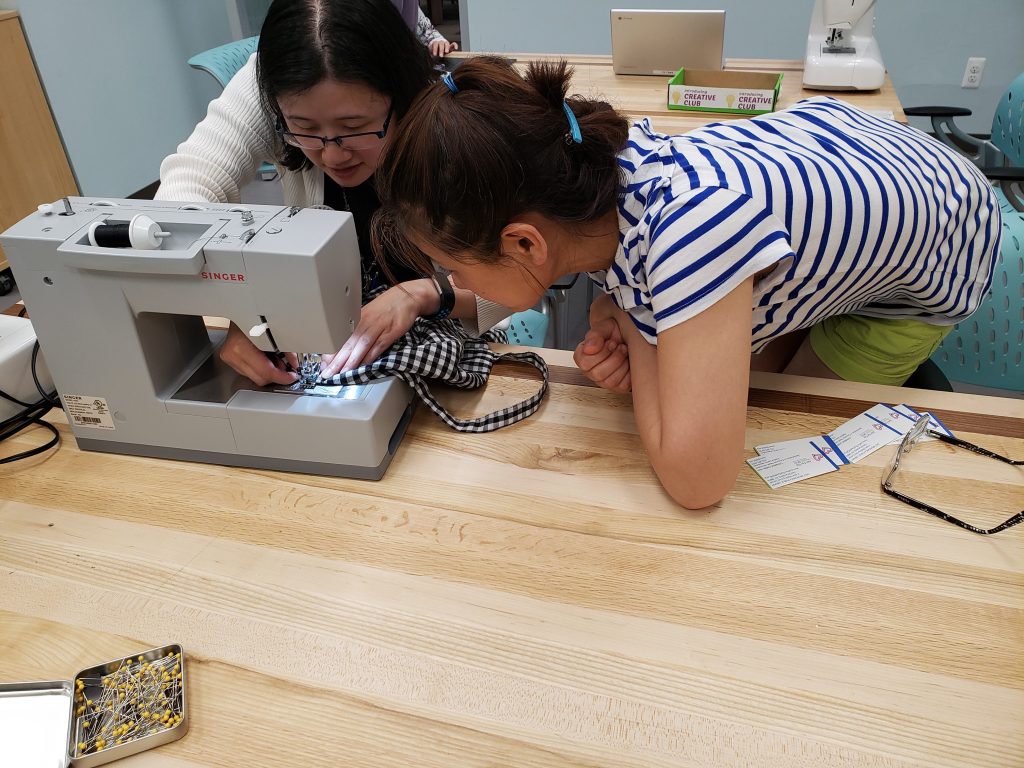
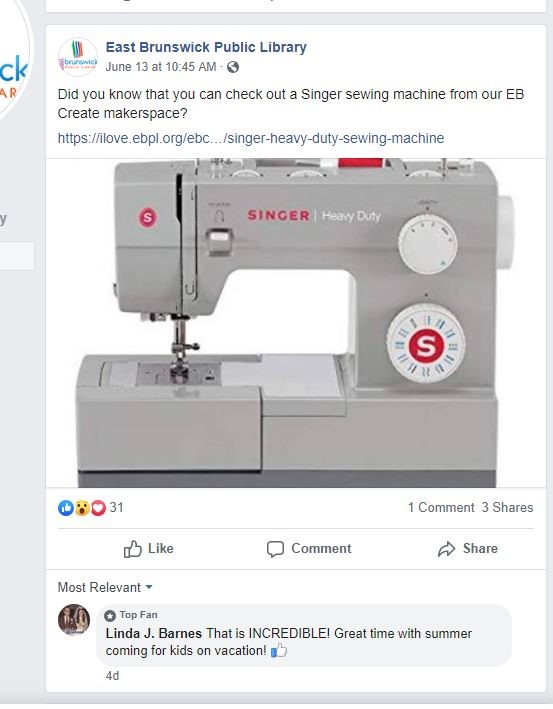
What we came up with is a hodgepodge of many different interests. We have a recording studio and Macs with editing software for videos, photos, and music. We have sewing machines and a button maker. We have craft supplies and a green screen. Everything in the space has a staff member who is “expert” in that resource. This allows us to staff the space with our limited resources. We don’t have a makerspace manager or a librarian that is solely dedicated to working in the space so we’ve made do with what we have.
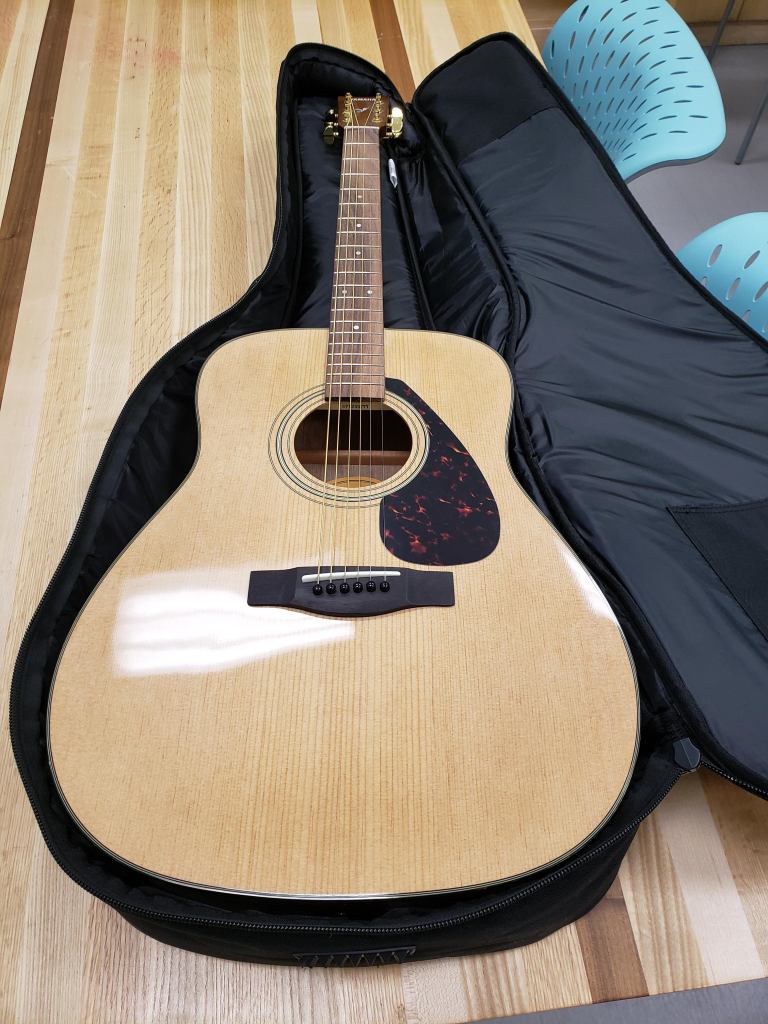
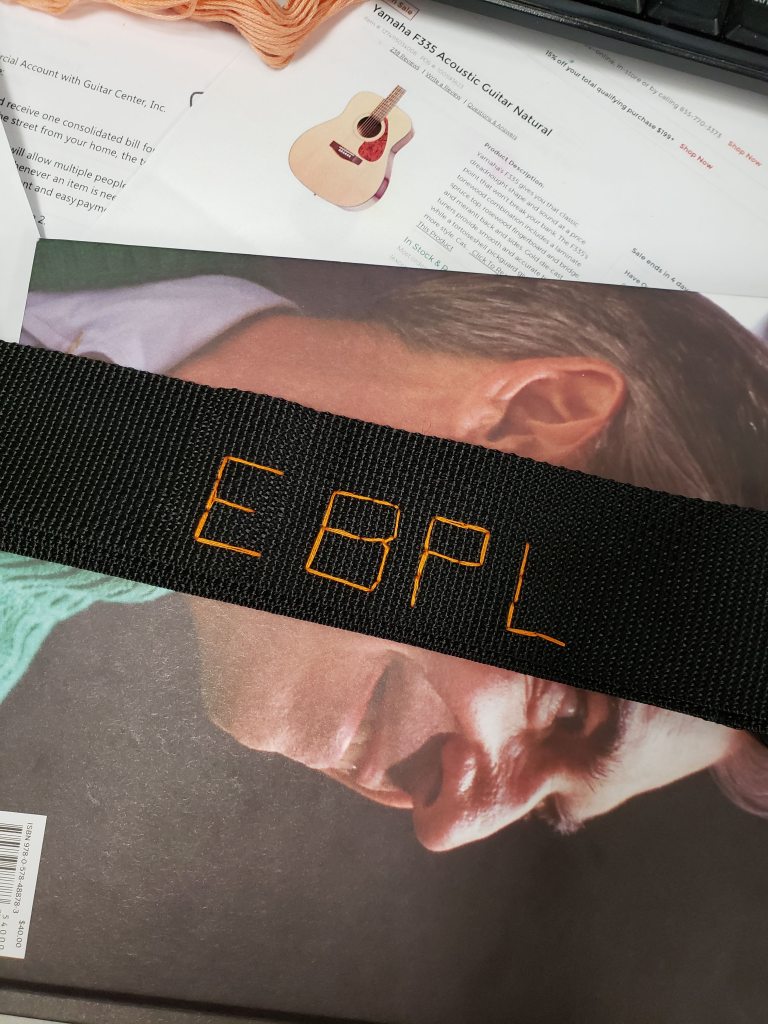
I pushed hard in the beginning to train all staff on as much of the makerspace as possible. In particular I felt it was important for everyone on a service desk to be able to check in and out our circulating kits from the makerspace. Since we don’t have a dedicated staff member in the space, I felt that it was only good customer service for everyone to be able to help patrons at any time. I created the check in/check out procedures for the kits as well as the guidelines for patrons use of the space. I also process every new kit that we create and make sure that the documentation is uniform. Processing kits can be creative in itself such as when I taught myself to embroider to add a label to the strap of our circulating guitar! Training is a continuous process with never ending tweaks and refreshers but it turns out, this is something I really enjoy!
I’ve really come around to the concept of a makerspace in the library. I love the idea of our patrons feeling welcome to use an area of the library without waiting for permission or guidance from a staff member. I love the idea of a creative space that the community can call its own. In the summer of 2019 we ran a pilot program where we encouraged staff members to show off their skills and talents each week to encourage our patrons to see themselves in the space. We had staff running drop in sessions on creating stationary, video editing, origami, sewing, and more. We saw a major increase in the independent use of the space by patrons as well as an increase in advanced bookings for the space.
I love to talk about makerspace and the challenges libraries face in implementing them successfully now! Contact me if you’d like to learn more!
 Jessica E. Schneider, MLS